Sunday, October 2, 2011

Some thoughts on… Having Privilege

From the last blog, I am continuing the theme of entitlement. In the US and EU, people are protesting austerity measures, because they feel they are owed something by the government rather than taking accountability themselves. The surprising part is that the protestors are relatively affluent members of society. If this were poor people in the US dissenting austerity measures or demanding jobs, their requests surely would be ignored.

So does having economic privilege result in a feeling of entitlement? Once again rather than the arts, I am going to use my experience in Mali to inform the question.

Last Monday, Cisse, my guide, and I drove to Djenne a city about 500km from the capital Bamako – leaving at 4am and getting back around 11:30pm. Each way took about 6 hours (enough time to sleep and write these blogs).


Figure 1: Cisse on right

The trip was comfortable. The road was paved and truck drivers pulled to the side to let others pass. The scenery was surprising for sub-saharan Africa. Although much of Mali is desert, the parts around the Niger River are lush and the crops feed much of the country. The contrast of the red earth with the green landscape is striking.


Figure 2: Landscape outside of Bamako

Along the way, were numerous guard and toll stops. The guards did not hassle the drivers nor were they looking for bribes. I am sure there is corruption in Mali but it was not obvious to me. One of the most organized stops was a Cholera checkpoint where everyone was supposed to wash their hands and shoes.


Figure 3: Mandatory cholera station along the road

The Djenne Mosque is a mud structure, the largest in the world, and a UNESCO Heritage Site. It is located on the original site dating back 1000 years, but the recent structure was reconstructed a hundred years ago.


Figure 4: Djenne Mosque

The market outside of the mosque takes place every Monday, and has been occurring for centuries with people coming from Burkina Faso, Niger and Mauritania to exchange goods.


Figure 5: Marketplace on Mondays

The setting provided an opportunity to reflect on privilege and entitlement. Imagine a 2x2 grid with the dimensions of “privilege” and “no privilege” on one axis, and “entitlement” and “no entitlement” on the other. We can imagine people falling into each of the four boxes:

• No privilege – No entitlement: Almost all the parents in the hospital queue in Bamako would fall into this category.
• Privilege – Entitlement: The Greeks and Americans seem to have this in spades

The corners of the grid seem to be the uncommon categories:
• Privilege – No Entitlement: These are people who continue to work hard, earn and contribute to society, even though they have enough money to live quite happily. A few people seem to fall into this box – Warren Buffet, Mike Bloomberg, George Clooney, Bill Gates.
• No Privilege – Entitlement: I thought it would be hard to find examples of this, but I describe one below.

At various points throughout our road-trip, there were kids trying to sell things. One rather entrepreneurial boy was selling rusty tin cans recreated into cars, bicycles, and dumptrucks. They were made by his “brother” and though a fascinating toy, I was a little frightened of typhoid. After my typical “merci non”, he surprised me by asking for a “cadeau”, or present, in French. Somehow the tourist culture has led to a dependency amongst the population where they expect items like bic pens or paper as a present – for not doing anything. Giving out pens was a practice I followed in India, but I now realize this is leading to an unhealthy reliance. This was one of the few examples I have seen of No Privilege – Entitlement outside of aggressive children beggars in India which have their own story (see Slumdog Millionaire).

Heartwarmingly the Malienne culture is trying to break the habit. Waiting for the ferry to Djenne, a 2-year old boy came up to me and started engaging. He was playing with two empty Fanta cans; I poured a little bit of my juice into his can which he drank with relish; when he came back for more, his brother batted him away. I didn’t take pictures of the boy or the children at the hospital, because it seemed to intrude on privacy.


Figure 6: Ferry to Djenne (truck fell into water trying to get on ferry)

Although privilege doesn’t always imply entitlement there does seem to be a strong correlation. I don’t have a solution to the issue (by no means advocating communism), just hoping that by being more aware we can choose a better path.

October 2, 2011

Tuesday, September 27, 2011

Some thoughts on… Feeling Entitled

People in Greece are protesting the government for imposing austerity, people in the US are blaming Obama for not having passed a job program, and politicians across the US/ EU are blaming each other for the impasse. We seem to have devolved into a society that keeps asking the government or our leaders, what next they can do for us. Is it just Westerners who have this feeling of entitlement or do others as well? Instead of seeing what the Arts have to say about this, I’ll use our visit to Mali to inform the question.

On the spur of the moment, Klaus signed up 1½ weeks ago to carry out burn and facial surgeries in Bamako, Mali with an organization called ReSurge! The team of 15 surgeons, anesthesiologists, nurses and pediatricians, arrived on Saturday night for a 2 week assignment at Gabriel Toure hospital – one of two public care settings in this city of 1.2 million. Since I was in Europe anyway, I decided to join for the first few days.

Mali is amongst the 25 poorest countries in the world, and yet socially very rich. The streets are safe and people are welcoming. Like other cities, kids try to sell you phone cards or trinkets or water, but a gentle “non merci” and they don’t bother you further. There is respect for the elderly, a conscious requirement for politeness – one must say “bonjour” or give salaam before engaging in discussion, and a sense of public discipline. The oppressing heat and local culture may prevent the Northern go-getter environment, and music pervades the cultural aesthetic.

In advance of surgery over the next two week, the team on Sunday was devoted to setting-up the operating rooms and screening patients. The hospital is an open architecture African edifice with large verandas, a network of crumbling buildings, and patients waiting on hallways floors perhaps days on end to be seen. Their faces exude patience and trust rather than frenetic activity. They may be seen by a physician today, or they may not, at least they are here.

One stream of activity is the arbitrage of patients. Radio announcements to outlying villages and the city told people about the free service weeks in advance. On Sunday morning, the halls were filled with over 300 people including parents and children. The diversity of the afflictions varies from cleft palates to severe burns that have healed and left the children functionally compromised, i.e. can’t lift an arm or open their hand. The parents likely amongst the poorest in the country sometimes require two translators to get to English – there are 21 local languages and French is spoken widely. They have dressed themselves and the children in their finest clothes and shoes to see the physicians, some of them likely having waited weeks or traveled hundreds of kilometers.

The hospital is not equipped to conduct these types of operations, and so the group brought 37 boxes of anesthesia equipment, gauze, antibiotics, and other essential items. Much of the material will be left behind except the equipment which must be taken back for the next outing. At the outset, the operating room contains two beds, two trolleys and good air conditioning. By the end, the set-up is sufficient to conduct about 6-8 surgeries a day, leading to a total of perhaps 60 cases in the 2 week period.


Figure 1: Klaus and Giem (from Vietnam) having set-up operating rooms


Figure 2: Anne Marie (Netherlands) and Fran (San Francisco) with OR supplies


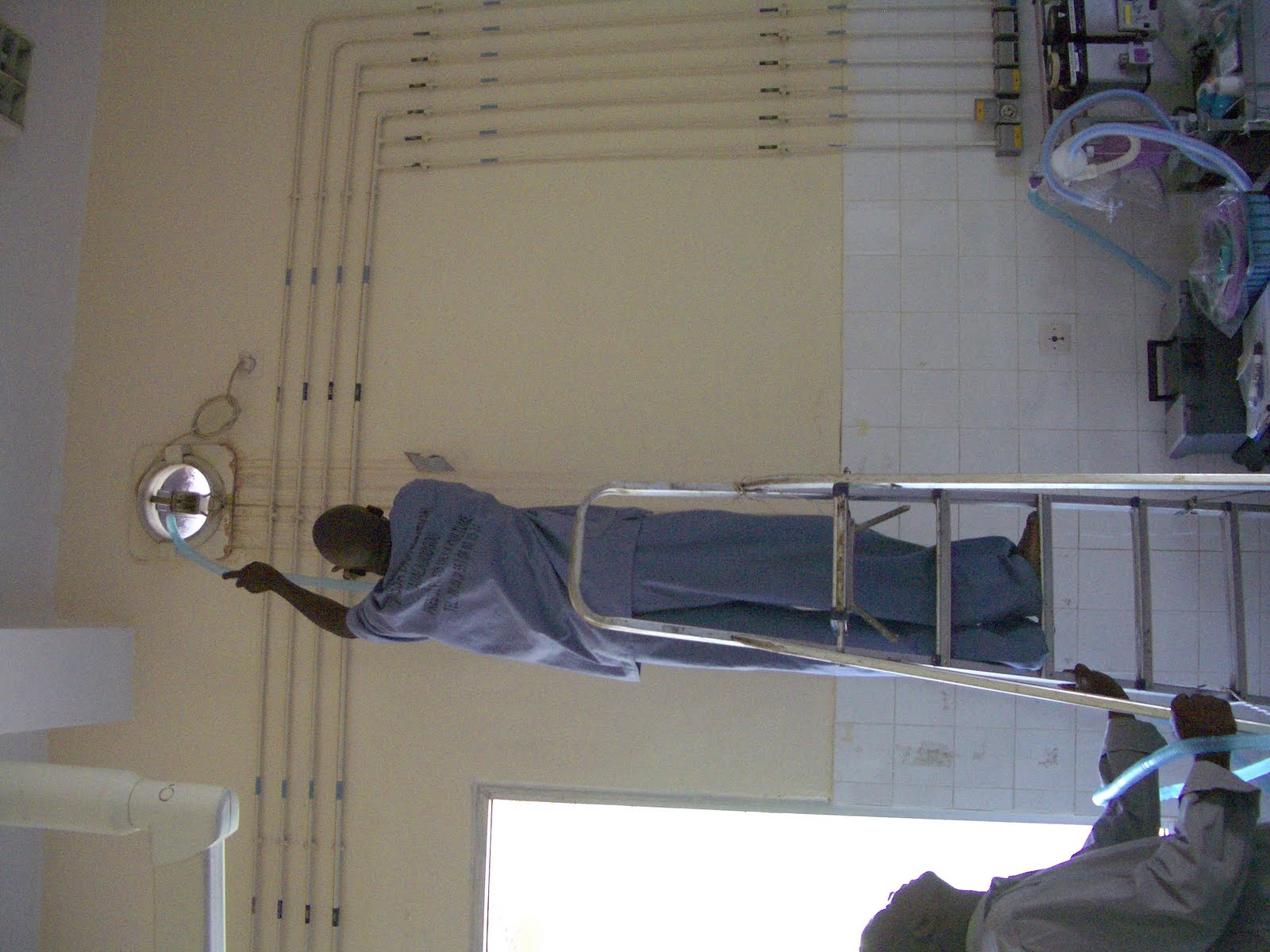
Figure 3: Improvising anesthesia exhaust

Although poor, this country is not Somalia. The kids are not malnourished, and the affection shown by the family to travel this far for a second chance is inspiring. The children are pure joy. They wait with open eyes and infinite patience likely not even understanding what the doctor will do.

Perhaps the most heart-rending decision is choosing who to treat given the seriousness of the condition and physical ability of the patient.
• A 3-month old with a cleft palate is turned away because she is too small – perhaps next year; sadness envelopes the parents’ face.
• A 4-year old with severe facial burns has a fever and screams for minutes at the touch of the nurses or instruments. He may be too frail to go through surgery, but the risk is taken otherwise he may lose his vision.
• A 6-year old named Aliya with a burn extending down her arm so that her wrist bone is showing, is so calm in the screening room, there is a thought she may not recover from anesthesia, the mother insists she is just very scared.

It would be impossible to treat everyone. As with any volunteer program, the point is to see and heal as many kids as possible with the limited resources of time and money.

In the US, the “Great Generation” went to war believing in the creation of a world which would be a better place for their children. Their offspring, the Baby Boomers and Gen X, twisted the challenge into believing that they deserved a better world, and needed to acquire it at any cost including leaving a worse world behind. This sense of entitlement is pervasive, to the point where there is a prospect that the next generation (those under 5 now) may be poorer than us and inherit a degraded environment.

In Mali, the children and parents in the hospital are not feeling entitled. They have endured a tough circumstance and are thankful for the assistance – they are in no way expecting or believing they deserve support. Perhaps it is privilege in the US that is driving this sense of entitlement. The next blog will be about the distinction between the two terms.


September 26, 2011

Sunday, July 31, 2011

Some thoughts on… Brinkmanship

President Obama and Senator Boehner are locked in an epic struggle around the US budget and an increase in the debt ceiling. At stake is a potential government default resulting in stalled salary payments to government employees, a mar on the US’ debt rating and a further unraveling of the economy.

Held hostage to its Tea Party constituency, the Republicans have hijacked the conversation and are unwilling to accept any increase in taxes. The White House has acquiesced to the extent that many Democrats believe the President has given away too much. The current bill which has been broadly agreed to by both will be brought for a vote on Monday.

In these situations of brinkmanship, where the two sides are unmovable from their positions, how can a resolution be formed? Let’s see what the Arts have to say.

In Stephen Adly Guirgis’ play The Motherf*** with the Hat (MwtH), which ended on Broadway in mid July, the three main characters are caught in a love triangle. Bobby Canavale plays Jackie – broke, out of prison and can’t hold a job. His AA counselor played by Chris Rock is an upstanding citizen with a questionable moral standing. While Jackie’s fiancĂ©, Veronica, is disappointed in his inability to be financially productive is still sexually attracted to him, and may or may not be having an affair.

The play is 90 minutes of strained yearning, dogmatic posturing and unrivaled cursing. The divide between Jackie and Veronica is heart wrenching. You know that the two should be together, but by the end of the play, they have moved to such resolute positions, that they are unable to come together. The emotions of the characters are open wires sparking at each other when near, but so twisted in polarity that they nullify each other on contact.

In the recent Harry Potter movie, Deathly Hallows Part II, the saga closes with the archetypal clash between Harry and Voldemort. The books and movies have become our modern day morality tales – teaching society about choices and consequences similar to Aeschylus and Euripedes. Good and evil are apparent in the main characters, but the spectrum between is filled by other characters who are more fascinating. These individuals, like Dumbledore, Professor Slughorn or Draco Malfoy, are gradations of good and evil, and bridge the distance between Harry and Voldemort to find a peaceful resolution.

J.K Rowling sets out from the beginning that there is not a common ground, and in order for one to live the other must die. Harry’s realization of this truth allows him to resign to death eventually coming back stronger to vanquish a weakened Voldemort. The eighth movie is the best since movie #3 (Prisoner of Azkaban). The dark tones and immediate pacing propel the story to the inevitable conflict, leaving the viewer exhausted and enthralled on the sideline. We saw the movie in IMAX 3D – definitely worth the $4 extra dollars.

In the on-going budget battle, there seems to be two resolutions. The first is for the President to relent to the demands of the Republicans. This seems to be the path he is taking. The hope is that by submission on the current battle, similar to Harry, he can eventually win the war. The second option is to hold to the positions, and let the country default. This will be a difficult outcome and like the characters in MwtH, we can wish for a different resolution. Perhaps US citizens and Tea Party members need to see the depths of an economic downturn in order to appreciate the consequences of brinkmanship.

July 31, 2011